
- Noise Control in Agricultural Production -
Noise Characteristics of Farm Machinery and the Resulting Temporary Threshold Shift
Summary
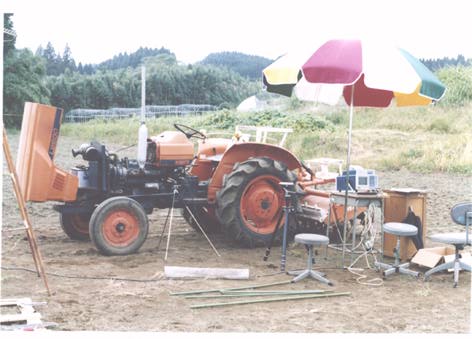
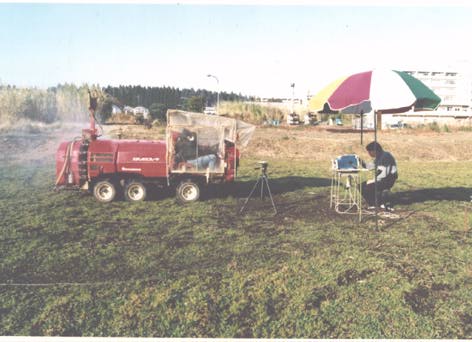
The characteristics of the noise produced by some agricultural machineswere investigated. The intensity with which such noise reaches the operator'sears and its consequential effect on the operator, particularly with respectto sound level temporary threshold shift (TTS), were also studied. Theresults are as follows:
1) The noise produced by agricultural machines spread concentricallyfrom the engine and muffler parts. Attenuation values were about 2-4 dB/mstarting from 2 m radial distance from the noise source and farther.
2) Maintaining a distance of equal to or more than 2 m from the noisesource to the other workers provide less danger from temporary hearingloss. However, proper communication between the operator and the otherworkers could be negatively affected.
3) The agricultural machines used in the test had produced noise thatenter the ears of the operator at 85-102 dB levels. However, the LaborMinistry's guidelines for noise injury prevention indicates a maximum safelevel of 85 dB only. As such, continuous use of the machines tested inthis experiment could be quite unsafe and dangerous to the ears.
4) The most prevalent sound frequency levels that were observed nearthe operator's ear while the various agricultural machines were being testedwere those that belong to the 30, 50, 60, 70, and 120 Hz (power spectrum).
5) Sound level TTS of (5 dB was observed on the operator's hearing abilityafter using some of the test machines for 1-3 hours. However, TTS levelsof 5-15 dB were observed immediately after the use of most of the machinesuntil an hour after stopping the work. Hearing loss recovery then startsuntil full recovery was achieved at around 3 hours after the working period.Noise levels near the operator's ear while using the test machines were85-93 dB.
6) All of the machines that were tested caused TTS levels of equal toor more than 15 dB. This is true for both the hearing abilities by airconduction and by bone conduction that were measured. Most of the temporarythreshold shifts were observed at 250, 500 and 8000 Hz, and 250, 500, and2000 Hz for the air conduction and bone conduction hearing abilities, respectively.
7) The data collected from the use of the different test machines indicatedthat the hearing ability by bone conduction is more easily influenced bynoise as compared to that of air conduction. Furthermore, sound level TTSis not solely influenced by noise but also affected by machine vibrationand work intensity. Likewise, the effect of noise is not fully dependenton the noise intensity near the operator's ear but also influenced by thesound frequency, especially at the low frequency band.
8) Considering the fact that as much as 15 dB of sound level TTS resultsfrom as short as 1-3 hours of agricultural machine work, it is necessaryto reduce machine noise. Suppressing the noise level could definitely enhancethe work environment by ensuring the safety and comfort of the operatorand of the other workers in the field.